
The ideal HubSpot alternative for a small business may overwhelm you in terms of the variety of options available to you to choose between CRM, marketing automation, and sales under a single roof. HubSpot is now the preferred option of a lot of teams, although it is not the only one that should be taken into account in 2026.
As the market value of CRM systems is expected to reach over $100 billion and the adoption of CRM by businesses is rising at a faster rate than ever before, now is a great time to consider solutions that fit your company, staff size, and expansion objectives. Nearly 91 % of companies with 10+ employees now use a CRM to manage customer data and align sales with marketing, a strong signal that the right tool dramatically changes business performance.
You want something lightweight and inexpensive or something strong and automated with advanced reporting, and this guide gets right to the point. We will present the best HubSpot substitutes in 2026, their comparisons, and which one suits this or that business requirement, all with the focus on having explicit ideas that you can take immediate action on.
Why Businesses Look for HubSpot Alternatives
Businesses look for HubSpot alternatives mainly because of pricing growth, feature complexity, and the need for simpler CRM first tools. While HubSpot is powerful, it is not always the best fit for every small or growing business. Many small teams start with HubSpot because it combines CRM, marketing automation, and sales tools in a unified suite. But as businesses grow, three key trends push teams to evaluate alternatives:
- Pricing Scalability Issues: HubSpot’s pricing can escalate quickly once you exceed free plan limits or need advanced automation features. Many small businesses discover that tier upgrades are necessary sooner than expected.
- Feature Overload for SMBs: HubSpot’s comprehensive suite is powerful, but small teams often find many features unnecessary or overly complex for day to day operations.
- Demand for Simpler CRM First Tools: Some businesses prioritize basic contact management, pipeline visualization, and affordable automation over an extensive feature ecosystem.
Featured Article: Best Semrush Alternatives in 2026
How We Evaluated the Best HubSpot Alternatives
We evaluated each HubSpot alternative based on practical performance, real user feedback, and how well it supports small and growing businesses. Our goal was to identify tools that deliver strong CRM functionality without unnecessary complexity. We scored each tool based on criteria aligned with real business needs in 2026:
CRM Features & Usability
- Contact management depth
- Dashboard clarity
- Custom fields & tagging
- Ease of onboarding
Marketing Automation Depth
- Email workflows
- Behavioral triggers
- Lead scoring
- Segmentation tools
Sales Pipeline Management
- Visual deal tracking
- Forecasting tools
- Activity reminders
- Reporting accuracy
Integrations
- Google Workspace
- Shopify
- Slack
- Zapier
- Accounting software
Pricing & Free Plans
- Transparent pricing tiers
- Startup-friendly options
- Scalability without sudden jumps
Featured Article: Best Streaming Software for Beginners
Best HubSpot Alternatives (Quick Comparison)
If you’re searching for the best HubSpot alternative for a small business, this quick comparison highlights tools that balance CRM functionality, marketing automation, and sales pipeline management without the high scalability costs.
Each platform listed below offers an affiliate program and serves as a strong HubSpot competitor analysisfor startups, growing SMBs, and sales-driven teams. Below is a snapshot to help you quickly compare the most relevant alternatives available in 2026 with affiliate programs.
| Tool | Best For | Core Features | Free Plan | Starting Price | Ease of Use |
| Zoho CRM | All Around SMB CRM | Contact management, automation | ✔️ | $14/mo | ⭐⭐⭐⭐ |
| Freshsales | Small Business CRM | Built-in phone, AI assistant | ✔️ | $11/mo | ⭐⭐⭐⭐ |
| Pipedrive CRM | CRM First Sales Tool | Deal pipelines, reporting | Free Trial | $14/mo | ⭐⭐⭐⭐⭐ |
| ActiveCampaign | Marketing Automation CRM | Email automation, segmentation | Free Trial | $15/mo | ⭐⭐⭐⭐ |
| NetHunt CRM | Gmail Integrated CRM | CRM inside Gmail, automation | ✔️ | $30/mo | ⭐⭐⭐⭐ |
| Agile CRM | Budget CRM | Basic automation & contact tracking | ✔️ | $8.9/mo | ⭐⭐⭐ |
| Omnisend | E commerce CRM/Marketing | Email & SMS marketing tools | ✔️ | $5/mo | ⭐⭐⭐⭐ |
| Nutshell CRM | B2B Sales CRM | Sales automation, analytics | Free Trial | $13/mo | ⭐⭐⭐⭐ |
| Wishpond | Lead Gen & Funnels | Landing pages, campaigns | Free Trial | Tailored prices | ⭐⭐⭐⭐ |
| Act! CRM | Established SMB CRM | Deep contact management | Free Trial | $30/mo | ⭐⭐⭐⭐ |
10 Top HubSpot Alternatives in 2026 (Detailed Reviews)
HubSpot remains one of the most popular CRM and marketing automation platforms, but it’s not always the perfect fit for every business. Whether due to pricing, feature limitations, scalability concerns, or specific workflow needs, many companies are exploring powerful alternatives in 2026.
Below is a detailed breakdown of the top HubSpot alternatives this year: highlighting what makes each platform stand out, their key strengths and limitations, and the types of businesses that benefit most from using them.
Here’s a deeper look at each leading HubSpot alternative for startups and businesses.
Zoho CRM: Best Overall HubSpot Alternative

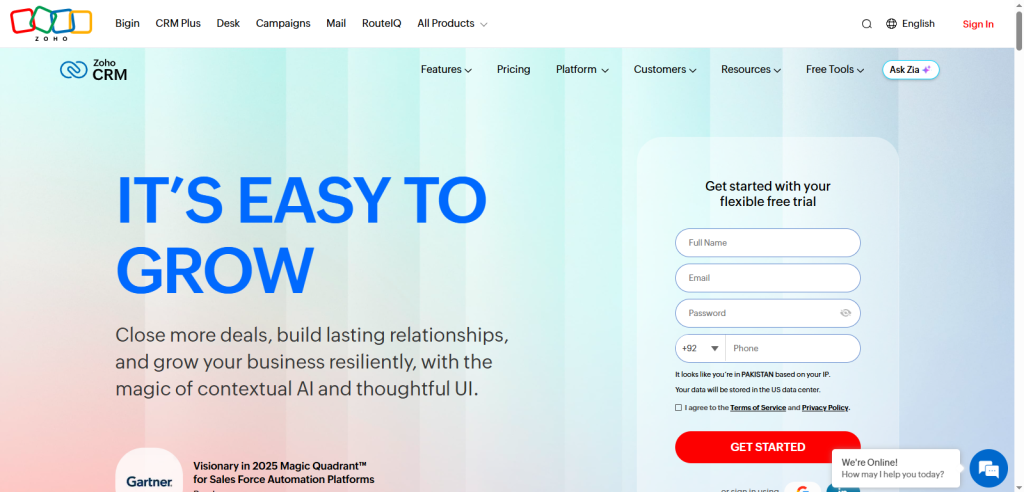
Zoho CRM consistently earns praise as a cost-effective, feature rich all around CRM that scales with business growth. It offers strong automation, AI insights, pipeline tracking, and multi-channel integration, powerful enough for established teams but flexible for startups. It is one of the best HubSpot alternatives for startups.Key Features:
- Contact & deal management
- AI powered sales assistant
- Workflow automation
- Multichannel communication integration
Pros:
- Great value at every tier
- Rich feature set for SMBs
- Strong ecosystem within Zoho One
Cons:
- Steeper learning curve for advanced features
Pricing Snapshot:
Affordable plans starting at competitive rates, with a free tier available.Best For:
Small to medium businesses that need a scalable CRM with automation + reporting.Freshsales: Best for Small Businesses

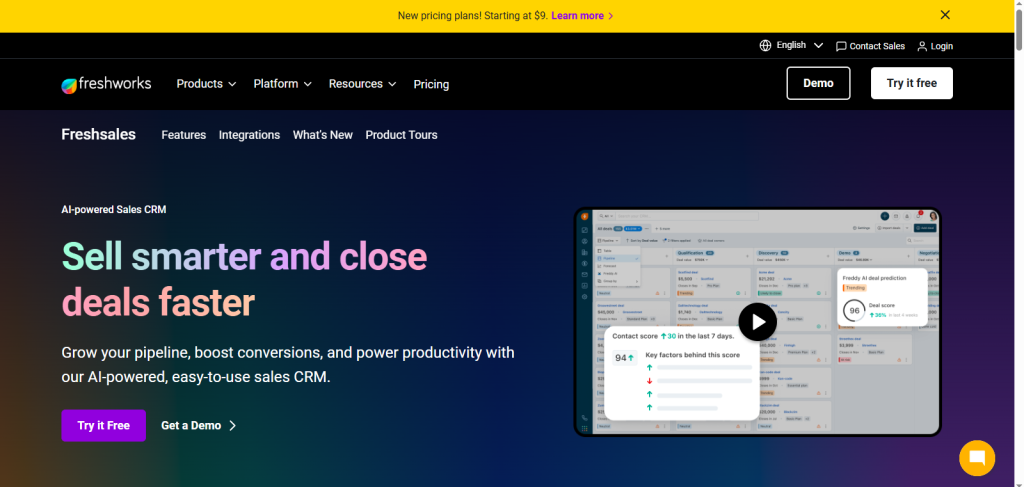
Freshsales stands out with simple sales workflows and intuitive dashboards that help small teams track deals without clutter. Freshsales offers a strong balance of CRM, marketing automation, and customer engagement tools. It combines lead scoring, built in phone/email, AI insights, and workflow automation into a unified platform.Key Features:
- Sales lead scoring
- Email & phone integration
- AI suggestions
- Deal pipeline insights
Pros:
- Easy setup
- Competitive free tier
- Great for small sales teams
Cons:
- Limited deep automation compared to bigger suites
Pricing Snapshot:
Free basic plan + tiered options to expand features.Best For:
Small businesses that want sales strength without complexity.Pipedrive CRM

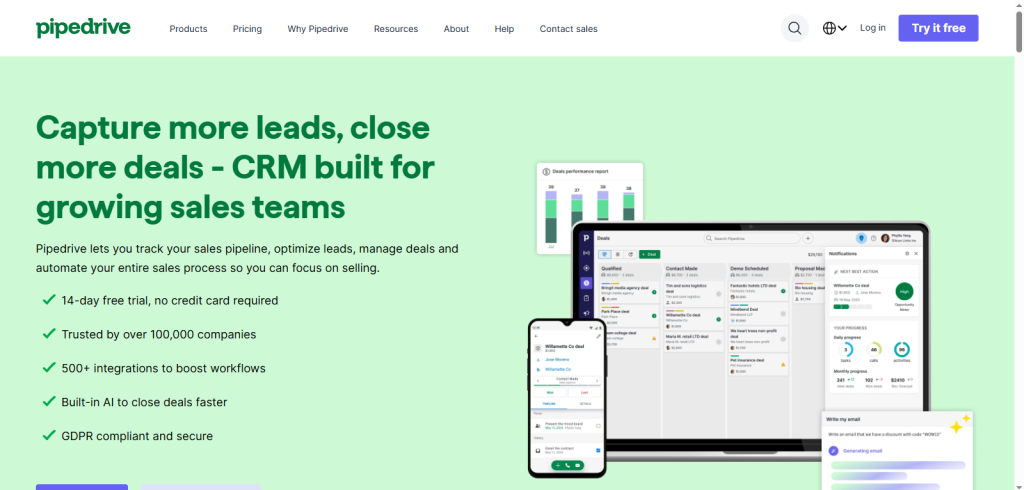
Pipedrive is built around simplicity and pipeline focus. Its visual sales pipeline makes deal tracking intuitive, and its automation and communication tools help small to medium sales teams close faster. While not as feature rich as HubSpot’s full suite, Pipedrive excels in usability and straightforward implementation.Key Features:
- Customizable pipelines
- Native reporting
- Goal tracking
- Easy lead import
Pros:
- Very intuitive
- Fast onboarding
- Highly visual UI
Cons:
- Basic automation compared to marketing heavy tools
Pricing Snapshot:
Affordable plans starting at $14/mo, with a free trial.Best For:
Teams are prioritizing the sales pipeline for clarity and simplicity.Active Campaign: Best for Marketing Automation

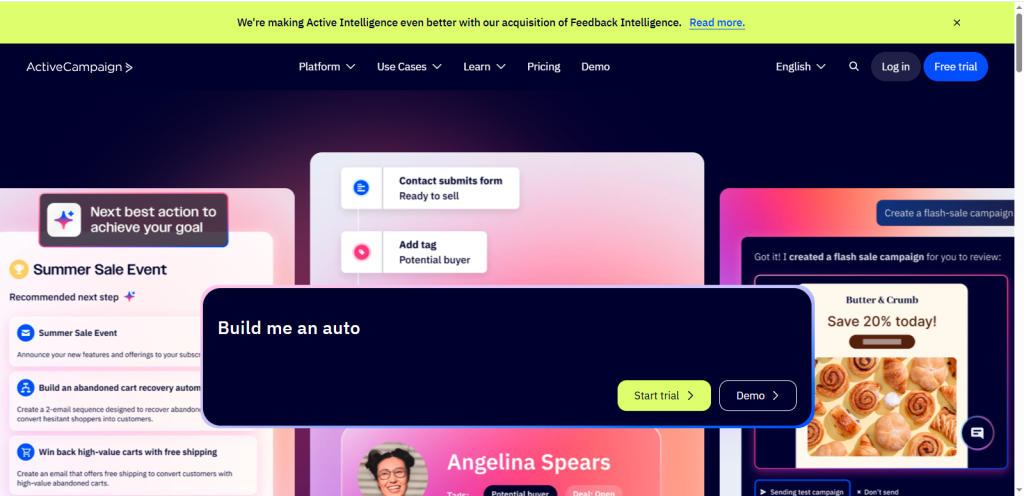
ActiveCampaign excels at automation driven marketing. Its workflows help nurture leads at scale without extra tools. ActiveCampaign shines in email marketing and customer experience automation. Its advanced automation builder, predictive content, and personalization make it ideal for businesses prioritizing marketing communications. While CRM features are lighter than HubSpot’s, its automation power is often superior.Key Features:
- Behavior-based automation
- Email + SMS sequences
- Segmentation & scoring
Pros:
- Deep automation capabilities
- Excellent for customer journey mapping
Cons:
- Not primarily a sales CRM
Pricing Snapshot:
Free trial and a plan starting at $15/mo.
Best For:
Teams that invest heavily in automated marketing workflows.Agile CRM: Best Budget HubSpot Alternative

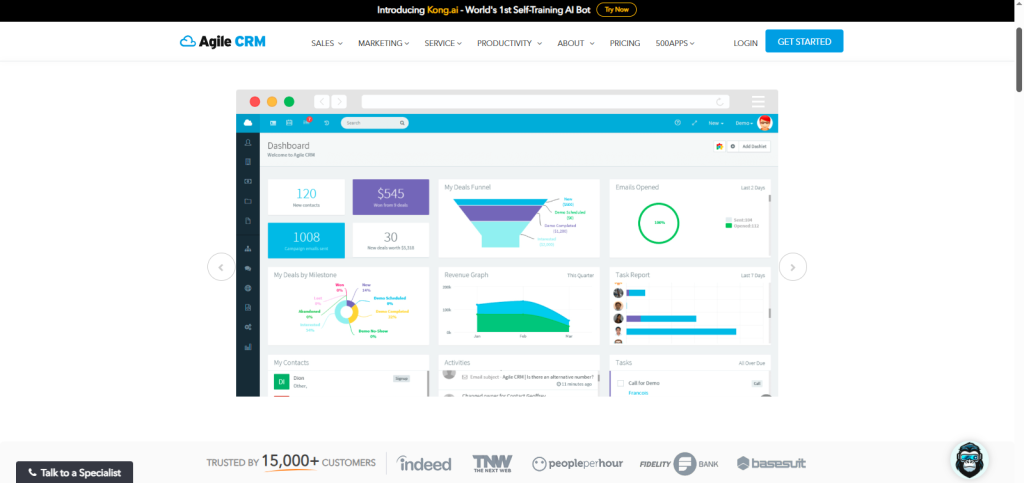
Agile CRM delivers a practical, affordable solution for businesses that need essential CRM functionality without the enterprise level complexity. It combines contact management, basic marketing automation, and simple sales pipeline tools into one streamlined platform. For startups and small teams that want an all-in-one system without juggling multiple subscriptions, Agile CRM offers strong foundational features at an accessible price point.Key Features:
- Email marketing
- Contact tracking
- Deals & tasks
Pros:
- Free tier available
- All in one light CRM
Cons:
- Less advanced analytics
Pricing Snapshot:
Affordable plans starting at $8.9/mo with a free plan.Best For:
Startups that are watching their budget closely.NetHunt CRM

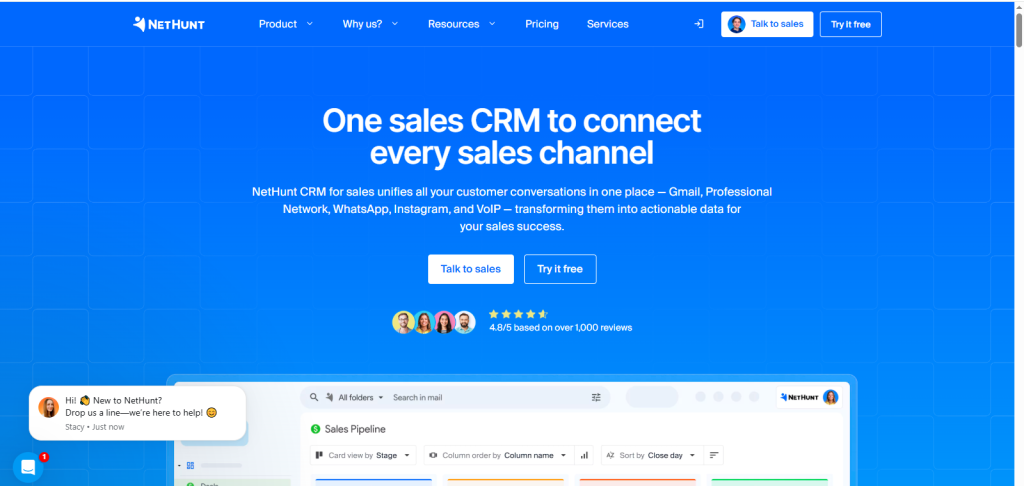
NetHunt CRM stands out by embedding full CRM functionality directly inside Gmail and Google Workspace. Instead of switching between multiple platforms, users can manage contacts, deals, emails, and workflows without leaving their inbox. This makes it especially powerful for teams that rely heavily on email communication for sales, partnerships, or client management.Because it operates natively within the Google ecosystem, NetHunt feels familiar and intuitive for teams already using Gmail, Google Sheets, and Google Drive. It transforms your inbox into a structured CRM system, allowing you to track conversations, automate follow-ups, and manage pipelines directly from email threads.
Key Features:
- CRM inside Gmail
- Workflow automation
- Reporting dashboards
Pros:
- Native Google integration
- Easy for teams already in Workspace
Cons:
- Google dependency
Pricing Snapshot:
Affordable plans starting at $30/mo, with a free plan.Best For:
Teams whose workflow centers around email.Omnisend: Best for E commerce Brands

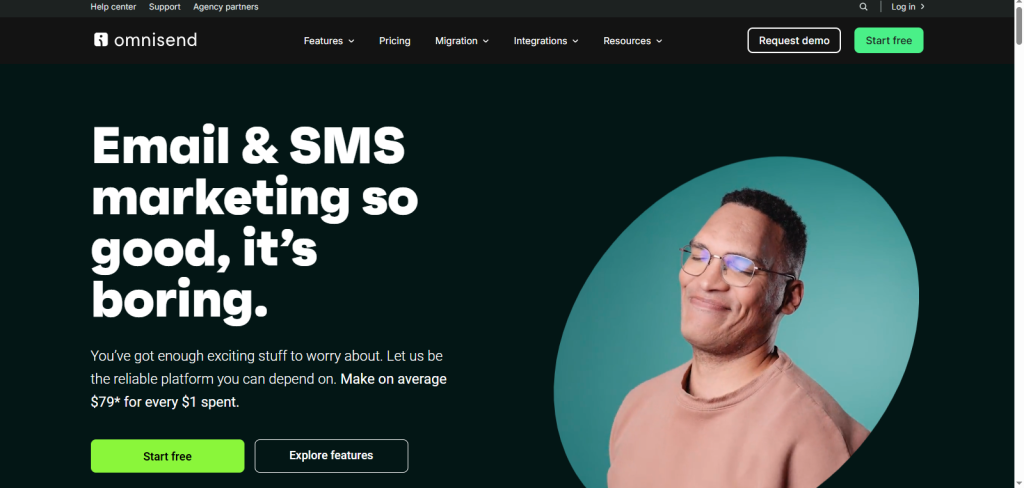
Omnisend is built specifically with e commerce businesses in mind, combining CRM data with powerful email and SMS marketing automation. Unlike general CRMs, Omnisend focuses on helping online stores increase conversions, recover abandoned carts, and build long-term customer loyalty through personalized communication. It integrates directly with popular e-commerce platforms, allowing businesses to sync customer behavior, purchase history, and browsing data into targeted campaigns.By connecting customer data with automated workflows, Omnisend enables online retailers to deliver the right message at the right time, whether it’s a welcome series, product recommendation, cart reminder, or post-purchase follow up. This makes it a high ROI solution for brands that rely heavily on digital sales channels.
Key Features:
- Prebuilt automation
- Email + SMS campaigns
- Ecommerce integrations
Pros:
- Great ROI for online stores
- Powerful segmentation
Cons:
- Less CRM depth outside e-commerce
Pricing Snapshot:
Affordable plans starting at $5/mo, with a free plan.Best For:
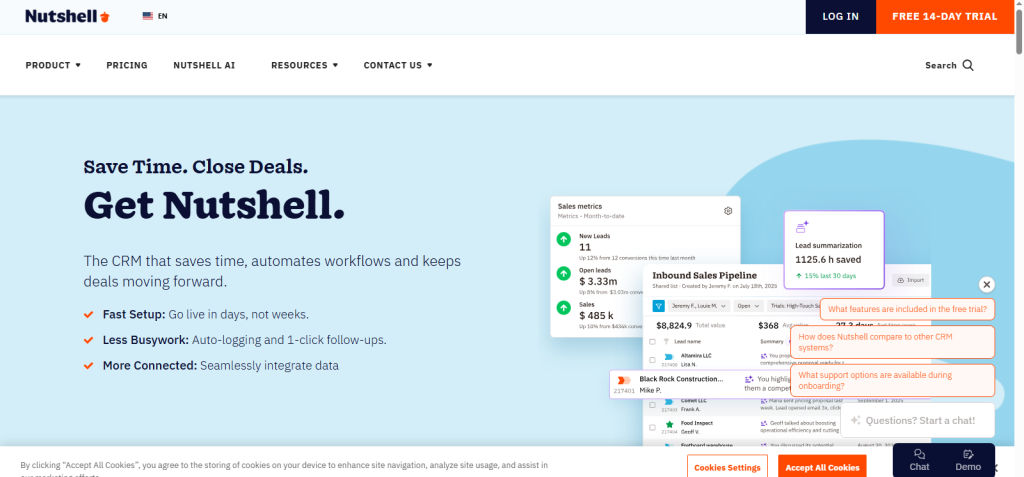
Online retailers that are looking to combine CRM with automated campaigns.Nutshell CRM: Best for B2B Sales Teams

Nutshell CRM is purpose built for B2B sales environments where relationship management, pipeline visibility, and performance tracking are critical. It combines sales automation with clear reporting tools to help teams manage longer sales cycles, multiple stakeholders, and complex deal stages. Unlike marketing heavy platforms, Nutshell focuses primarily on helping sales teams stay organized, track opportunities, and close deals more efficiently.Its intuitive interface makes it easy for growing teams to adopt without extensive training, while its reporting dashboards provide valuable insights into team performance, revenue forecasts, and deal progression. For B2B organizations that prioritize structured sales processes over heavy marketing automation, Nutshell delivers clarity and control.
Key Features:
- Sales automation
- Reporting
- Integrations
Pros:
- Strong B2B focus
- Good support
Cons:
- Not as strong in marketing automation
Pricing Snapshot:
Affordable plans starting at $13/mo, with a free trial.Best For:
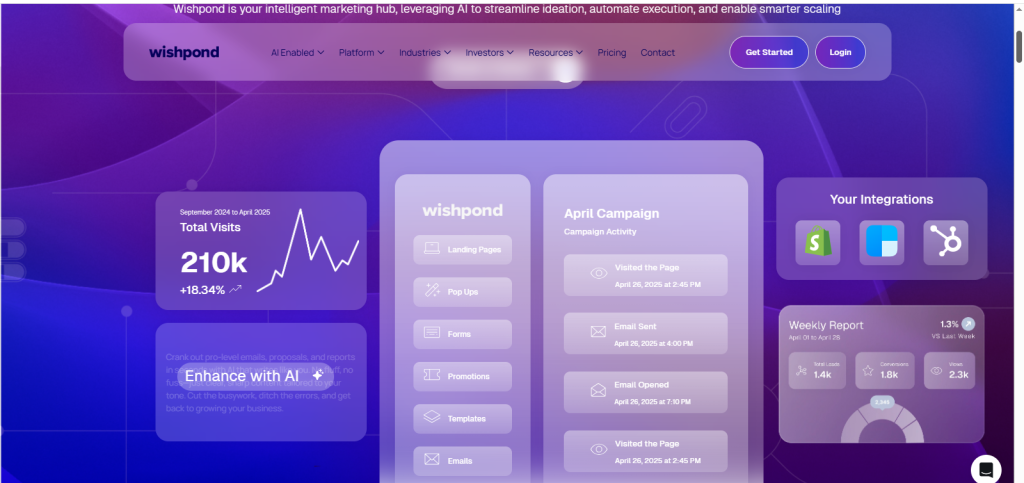
Growing B2B sales teams need data clarity.Wishpond: Best for Lead Generation
Wishpond is designed for businesses that prioritize lead generation and conversion focused marketing. Rather than functioning as a deep, sales heavy CRM, Wishpond excels at capturing prospects through landing pages, pop ups, and lead forms, then nurturing them with automated campaigns. It is particularly effective for businesses running digital marketing campaigns, webinars, product launches, or promotional funnels.With built in A/B testing and automation tools, Wishpond helps teams optimize every stage of the early customer journey. From attracting visitors to converting them into qualified leads, the platform focuses on improving engagement and driving measurable campaign results. While it does not offer the extensive CRM depth found in enterprise platforms, it delivers strong value for businesses centered around campaign driven growth.
Key Features:
- Lead capture tools
- Campaign automation
- A/B testing
Pros:
- Great for early funnel stages
- Easy campaign setup
Cons:
- CRM depth limited
Pricing Snapshot:
Affordable plans with a free trial+ paid tailored plans.Best For:
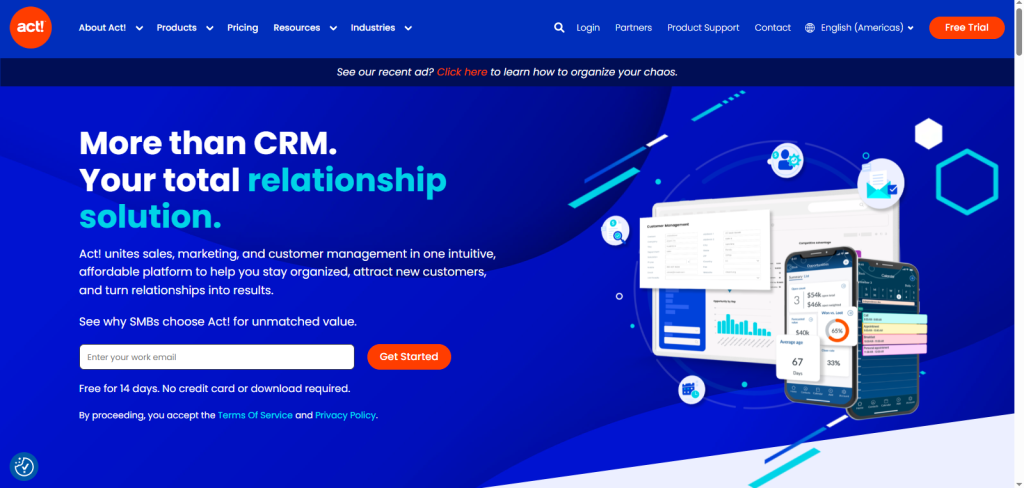
Businesses prioritize lead generation and campaigns.Act! CRM: Best for Established SMBs
Act! CRM is designed for established small and mid sized businesses that require detailed contact management and structured sales tracking. Unlike lightweight CRMs built for startups, Act! focuses on helping mature teams manage long term customer relationships, complex account hierarchies, and well-defined sales processes. It is especially valuable for companies that already have an organized workflow and need a system that can adapt to their existing structure rather than forcing a new one.One of Act!’s biggest strengths is its flexibility. Businesses can customize fields, track detailed interaction histories, and build tailored sales processes that align with their operations. Additionally, Act! offers both cloud and on premise deployment options, making it appealing to companies that prioritize data control and security.
Key Features:
- Contact hierarchies
- Custom fields
- Process tracking
Pros:
- Deep contact insights and relationship management
- Highly customizable database structure
- Strong on-premise support for data-sensitive businesses
- Suitable for structured, mature sales teams
Cons:
- Pricier than basic alternatives
Pricing Snapshot:
Affordable plans starting at $30/mo, with a free plan.Best For:
Established SMBs with structured sales processes.
Featured Article: 10 Best Brand Mention Tools in 2026
Free vs Paid HubSpot Alternatives: Which One Should You Choose?
Choosing between free and paid HubSpot alternatives depends largely on your business stage, operational complexity, and growth plans. While free tools can cover essential needs, paid platforms unlock deeper automation, analytics, and scalability.
Free Alternatives Work Well When:
Free CRM tools are ideal for early stage businesses or small teams that are just beginning to organize their sales and customer data. They provide essential features without financial pressure.
- Your team has fewer than 5 users
- You need basic CRM + email tracking
- Budget is a priority
Paid Alternatives Make Sense When:
As your business grows, manual processes and limited reporting can slow you down. Paid CRM plans become valuable when automation, forecasting, and performance tracking start impacting revenue decisions.
- You need automation beyond basics
- You want reporting and predictive insights
- Your sales pipeline is complex
Choosing by Business Size:
Different business sizes require different CRM strengths. Instead of choosing based only on price, it’s smarter to match the platform to your operational needs and growth goals.
- Startups: Agile CRM, NetHunt CRM
- Growing teams: Freshsales, Zoho CRM
- Marketing focus: ActiveCampaign, Omnisend
- Sales focus: Pipedrive, Nutshell CRM
- Established SMBs: Act! CRM
Conclusion
The selection of the appropriate HubSpot alternative to use in a small business depends on the understanding of what is important to your team and its business development trend.
To get a balance of sales, automation, and reporting, Zoho CRM and Freshsales will provide high all- around value. ActiveCampaign is more than ideal for teams working on deep marketing automation.
When simplicity and clarity of the pipeline are the most important factors, Pipedrive provides a clean and efficient interface. Omnisend and NetHunt CRM work better in such niche cases as e commerce and Google Workspace driven processes.
In the end, the CRM that you should have is the system that fits your business processes, requires less manual work, and allows growth without unwarranted complexity and cost.
The above options have placed you in a good position to discover a tool that can be applied to meet your workflow, budget, and long term CRM plan, enabling your business to compete smarter in 2026 and beyond.