
Continuing to send email campaign manually and feel that the results are not consistent? In 2026, the brands that will win inbox attention will not be sending more emails, but they will be smarter. Optimal email automation systems can help companies send the right message at the moment a subscriber takes a step, whether registering, leaving a cart, or visiting a product page.
Email automation is not an option anymore. A series of industry surveys indicates that automated emails have been shown to have much more engagement and revenue than a one off email campaign. There are automated workflow reports that have generated more than 30 times more revenue per recipient than regular email blasts. There is a distinction between precision marketing and passive communication.
Automation enables you to personalize at scale, scale nurturing leads automatically, and increase revenue without increasing workload, regardless of the size of your business, whether a small business, an e-commerce store, a SaaS company, or an agency.
Here, our guide will compare the 15 best email automation tools in 2026, comparing features, cost, advantages, and disadvantages, and sharing actual examples of their application to your business to help you choose the correct platform.
What Are Email Automation Tools & How They Work
Email automation tools are SaaS platforms that let marketers send emails triggered by specific user behavior or lifecycle stages, like signing up, making a purchase, abandoning a cart, or lingering on a product page. Instead of manually drafting campaigns, automation sequences send messages automatically based on logic you define.
Email Marketing vs Email Automation
Email marketing and email automation are often used interchangeably, but they are not the same. Email marketing refers broadly to sending promotional messages, newsletters, updates, or announcements to a subscriber list. These campaigns are often created and sent manually to a large audience at once. While effective for announcements or promotions, they typically lack individualized timing and behavioral targeting.
With automation:
- Messages trigger based on subscriber actions.
- Workflows are sequenced and timed logically.
- Personalization is data driven and dynamic.
In contrast, email marketing alone typically involves one-off campaigns with limited personalization.
How Automation Improves Conversions & Retention
The performance difference between automated emails and manual campaigns is significant. According to industry research from Omnisend, automated emails account for a small percentage of total sends but drive a disproportionately high percentage of email-generated sales. In fact, automated messages have been shown to generate thousands of percent higher conversion rates compared to standard campaigns.
Data clearly supports automation’s performance advantage:
- Automated workflows can generate up to 30x more revenue per recipient than manual campaigns.
- Even though automated emails make up just 2% of total sends, they drove 37% of all email-generated sales according to industry reports.
These performance gains stem from smarter timing, personalization, and relevance.
Who Should Use Email Automation Tools?
Email automation tools are now essential for a wide range of users:
- Small business owners who want to nurture leads without hiring a team.
- E commerce brands are aiming to recover abandoned carts and increase repeat purchases.
- SaaS companies streamlining onboarding and customer expansion flows.
- Agencies managing multiple client campaigns and optimizing retention.
- Enterprise teams that need scalable, customizable workflows.
In other words, anyone who wants to earn more from email without manually sending thousands of campaigns should consider automation.
Best Email Automation Tools: Quick Comparison
Choosing the right email automation tool can be overwhelming, especially when each platform offers different features, pricing structures, and strengths. To help you make a faster and more informed decision, we’ve summarized the best email automation tools for businesses below.
This table highlights their core strengths, automation capabilities, availability of free plans, and starting price points so you can quickly identify the best options based on your business needs.
| Tool | Best For | Automation Features | Free Plan | Starting Price |
| HubSpot | All in One Automation & CRM | Lead scoring, workflows, CRM | Yes | $9/mo |
| Mailchimp | Beginners | Basic automation & templates | Yes | $6.5/mo |
| ActiveCampaign | Advanced automation | Conditional workflows, tags | Yes | $15/mo |
| Klaviyo | Ecommerce | Powerful ecommerce triggers | Yes | Mid range |
| GetResponse | Webinar + automation | Funnels + automation | Yes | $15/mo |
| Constant Contact | SMBs | Easy automation | Yes | $12/mo |
| Brevo | Budget | SMS + email automation | Yes | $8/mo |
| Kit | Creators | Simple sequences | Yes | $33/mo |
| Beehiiv | Newsletters | Monetization focused | Yes | $43/mo |
| Omnisend | Ecommerce Multichannel | SMS + automation | Yes | $11.2/mo |
| MailerLite | Affordable | Easy workflows | Yes | $9/mo |
| Zoho Campaigns | Zoho ecosystem | CRM + automation | Yes | $25/mo |
| Lemlist | Cold outreach | Sequence automation | Yes | $63/mo |
| Moosend | Value | Smart automation builder | Yes | $7/mo |
| EmailOctopus | Low cost | Simple automation | Yes | Very low |
15 Best Email Automation Tools (In Depth Reviews)
Choosing the best email automation tool can dramatically improve your marketing performance, customer engagement, and overall ROI. With so many platforms offering features like workflow automation, audience segmentation, behavioral triggers, CRM integration, and advanced analytics, it can be challenging to determine which tool truly fits your business needs.
In this in depth guide, we review the 15 best email automation tools based on ease of use, automation capabilities, personalization features, deliverability rates, pricing structure, ecommerce integrations, and scalability.
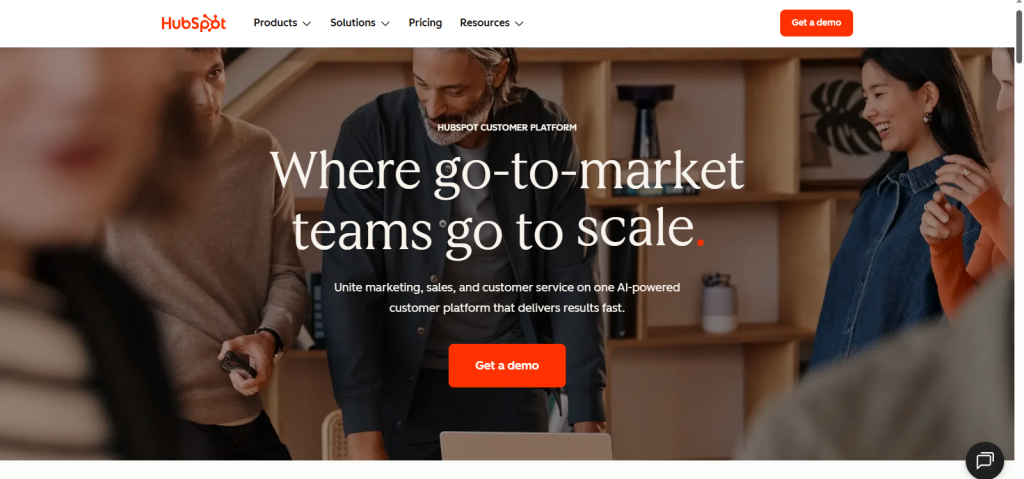
HubSpot: Best All in One Email Automation Tool

HubSpot is a market leader in CRM and marketing automation, designed for teams that want a seamless integration between their email campaigns and customer relationship management. Its automation capabilities go beyond simple triggers, offering sophisticated workflows that track every stage of the customer journey.
Whether you’re onboarding a new subscriber, nurturing leads, or managing post-purchase communication, HubSpot centralizes all data in one platform.
Its automation capabilities go far beyond simple time based triggers. HubSpot enables businesses to create sophisticated, multi step workflows powered by user behavior, lifecycle stages, lead scoring, and CRM activity.
Key Automation Features:
- Behavior based workflows that trigger actions according to user interactions
- Advanced lead scoring to prioritize high-value prospects
- Dynamic personalization for subject lines, content blocks, and offers
- Full CRM integration for actionable insights and reporting
Pros:
- All in one platform combining CRM, email, and automation
- Scales for small businesses to large enterprises
- Excellent analytics to measure ROI and conversion rates
Cons:
- Premium tiers can be expensive for smaller businesses.
- Complexity may be overwhelming for teams new to automation.
Pricing:
Free tier available with basic workflows; paid plans unlock advanced triggers, analytics, and full CRM integration, starting at $9/mo.
Best For:
Mid sized businesses and enterprise teams seeking robust, CRM centric automation. HubSpot is ideal if you want automation to drive long term revenue growth across multiple channels.
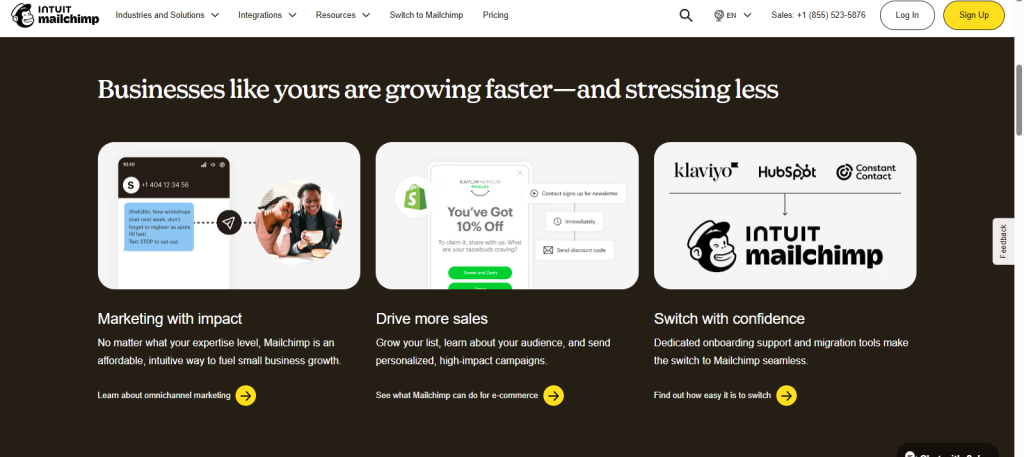
Mailchimp: Best for Beginners

Mailchimp is one of the most widely recognized and beginner friendly email automation platforms on the market. Its intuitive interface, drag and drop editor, and pre-built templates make it easy for anyone, regardless of technical expertise, to create professional looking email campaigns.Mailchimp is particularly appealing to small businesses, solopreneurs, and creators who want to start leveraging email marketing without a steep learning curve.
The platform supports a variety of automated workflows, including welcome series, follow ups, abandoned cart reminders, and simple drip campaigns. These tools help businesses engage subscribers from the moment they join a mailing list and maintain consistent communication over time.
With Mailchimp, users can segment audiences, personalize content, and schedule emails based on subscriber behavior or key dates, ensuring messages are relevant and timely.
Key Automation Features:
- Pre-configured welcome email sequences for new subscribers
- Basic segmentation based on demographics or behavior
- Event triggered emails for birthdays, sign-ups, or downloads.
Pros:
- Extremely easy to use and beginner-friendly
- Free plan supports up to 500 contacts with basic automation.
- Extensive template library for newsletters and campaigns
Cons:
- Limited advanced automation features at the free or lower tiers
- Costs increase significantly as your list grows
Pricing:
Free plan available; paid plans offer enhanced automation, advanced analytics, and larger contact support starting at $6.5/mo.
Best For:
Small businesses and individuals are looking for a straightforward, low-barrier introduction to email automation without a steep learning curve.
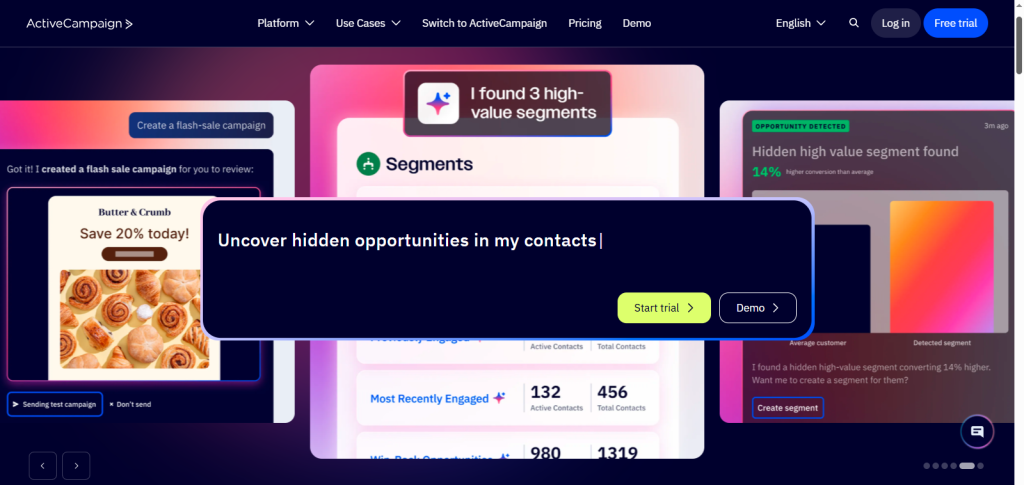
ActiveCampaign: Best for Advanced Automation Workflows

ActiveCampaign is perfect for marketers who want highly granular control over automation. Its visual workflow builder lets users create complex sequences based on behavior, engagement, and lifecycle stage.ActiveCampaign also integrates seamlessly with CRMs, ecommerce platforms, and analytics tools, making it ideal for businesses aiming to nurture leads, increase conversions, and drive revenue efficiently.
One of ActiveCampaign’s strongest features is its deep integration capabilities. It connects seamlessly with popular CRMs, ecommerce platforms such as Shopify and WooCommerce, analytics tools, and other marketing apps.
This integration ensures that every automated campaign is informed by real time customer data, allowing for hyper targeted messaging that maximizes conversions.
Key Automation Features:
- Conditional workflows and branching logic for personalized journeys
- Lead scoring to identify high potential prospects.
- Behavioral triggers based on clicks, opens, and site activity.
Pros:
- Extremely powerful automation builder for complex campaigns
- Excellent integration options with CRMs and ecommerce platforms
- Strong deliverability rates and analytics
Cons:
- Learning curve may be steep for beginners
- Interface can be overwhelming for small teams without dedicated marketing support.
Pricing:
Starts with Lite plan; higher tiers unlock CRM integration, advanced automation, and predictive analytics.
Best For:
Growth focused businesses and automation-savvy teams who want to implement advanced, multi step workflows that maximize engagement and conversions.
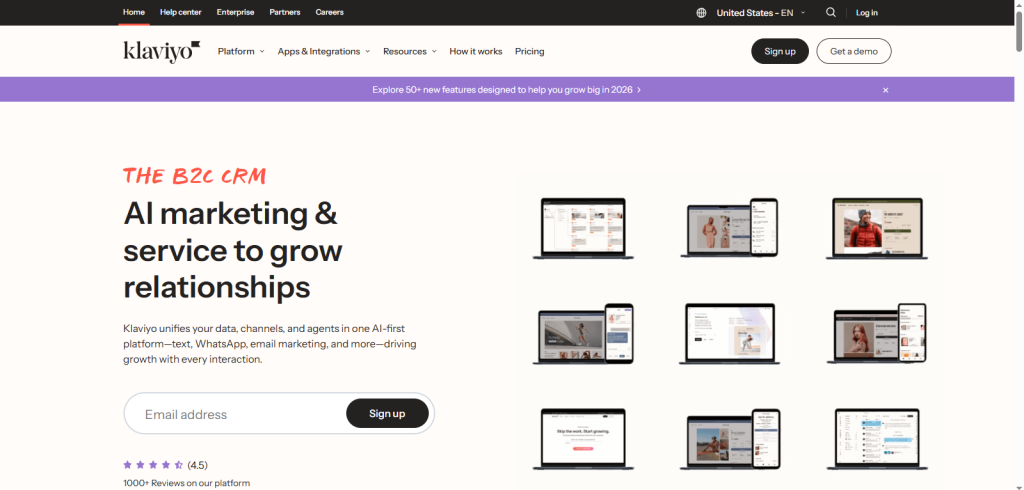
Klaviyo: Best for Ecommerce Brands

Klaviyo is engineered specifically for ecommerce businesses, offering deep integrations with Shopify, WooCommerce, BigCommerce, and other ecommerce platforms. Its automation focuses on driving revenue by targeting customers at key moments in their journey, such as abandoned carts, post purchase follow ups, or product recommendations.With Klaviyo, ecommerce brands can create highly personalized campaigns that feel one to one while being automated at scale. The platform focuses on revenue focused automation, targeting customers at critical moments in their journey.
This includes abandoned cart reminders, post purchase follow ups, product recommendations based on browsing or purchase history, and personalized re engagement campaigns. Klaviyo allows ecommerce brands to deliver campaigns that feel personal and one to one, even when sent automatically to thousands of subscribers.
Key Automation Features:
- Abandoned cart recovery workflows
- Dynamic product recommendations based on browsing and purchase history
- Revenue analytics to measure ROI for campaigns
Pros:
- Highly focused on ecommerce revenue growth
- Accurate, behavior driven targeting
- Built-in analytics to track conversion and lifetime value
Cons:
- Pricing can escalate with large contact lists
- Steeper learning curve for beginners
Pricing:
No free plan for large lists; paid plans scale with the number of contacts, offering advanced automation and analytics features.
Best For:
Ecommerce brands and DTC businesses are seeking to increase sales, improve retention, and automate personalized communication with customers.
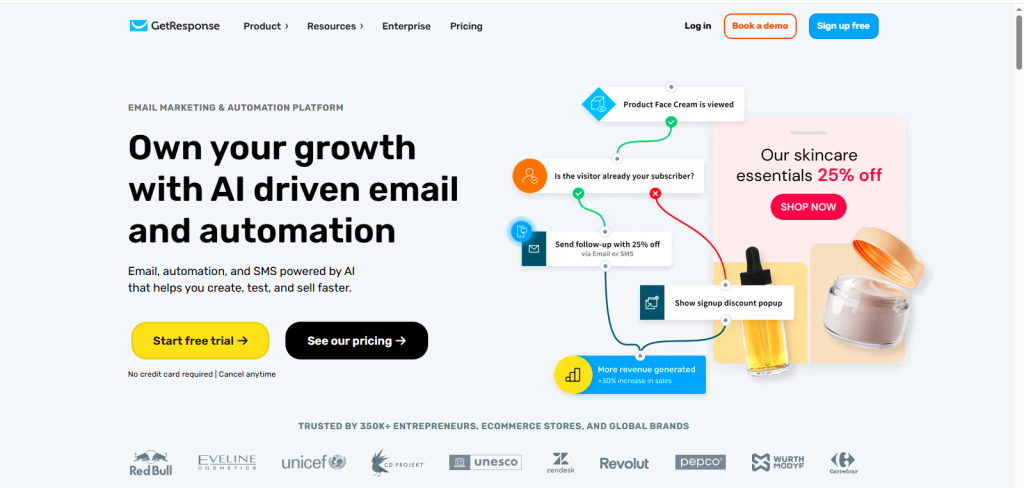
GetResponse: Best for Marketing Automation & Webinars

GetResponse is an all in one marketing platform that combines email automation with landing pages, webinars, and CRM functionality. It’s ideal for businesses looking to centralize marketing efforts in one place. Its automation workflows are visual and easy to manage, enabling behavior based campaigns that improve engagement and conversions.The platform’s automation capabilities are particularly powerful. Its visual workflow builder allows marketers to create behavior based campaigns that automatically adapt to user actions, such as website visits, email clicks, form submissions, or purchases.
Businesses can set up welcome series, drip campaigns, lead nurturing flows, and re engagement sequences with ease. These targeted campaigns help increase engagement, boost click-through rates, and convert leads into loyal customers.
Key Automation Features:
- Visual workflow builder with conditional logic and triggers
- Integration with webinars and event based marketing campaigns
- Advanced segmentation and tagging for personalized content
Pros:
- Comprehensive platform for marketing beyond email
- Supports complex automation workflows
- Excellent reporting and analytics
Cons:
- Some advanced features are limited to higher-tier plans.
- Slightly steeper learning curve for beginners
Pricing:
Plans start at a competitive monthly rate, with advanced automation, webinars, and CRM features included in premium tiers, $15/mo.
Best For:
Businesses that want marketing automation combined with webinars and lead generation in a single platform.
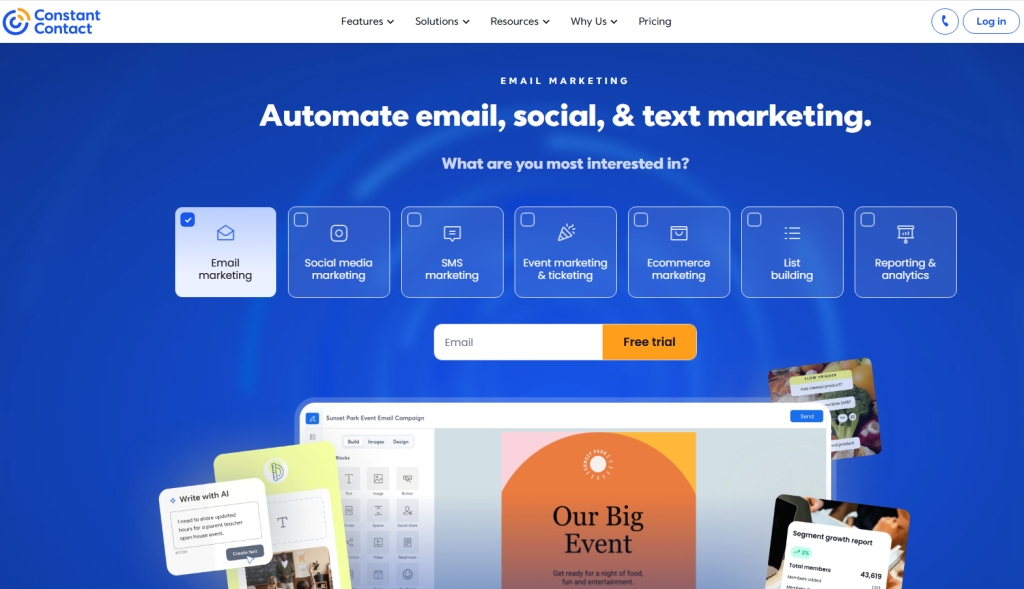
Constant Contact: Best for Small Business Email Marketing

Constant Contact is widely recognized as one of the most accessible and beginner friendly email automation tools for small businesses, startups, nonprofits, and local brands. It is designed specifically for users who may not have advanced technical skills but still want to run professional email marketing campaigns.The platform focuses on simplicity, offering an intuitive dashboard, guided setup processes, and pre-built templates that help businesses launch campaigns quickly without needing coding knowledge.
One of its biggest strengths is ease of use. From importing contact lists to designing newsletters and setting up automated welcome emails, every step is streamlined for efficiency. Constant Contact also includes basic automation workflows such as welcome sequences, anniversary emails, and simple follow ups, allowing small teams to nurture leads without managing campaigns manually.
Key Automation Features:
- Automated welcome emails and birthday campaigns
- Segmentation by contact lists and engagement metrics
- Integration with ecommerce and CRM platforms
Pros:
- Very beginner friendly and intuitive
- Strong customer support and educational resources
- Reliable deliverability
Cons:
- Limited advanced automation features
- Pricing increases with list size.
Pricing:
Offers flexible plans based on the number of contacts; includes email templates, automation, and reporting tools. Starting at $12/mo.
Best For:
Small businesses or startups looking to implement email automation quickly without a steep learning curve.
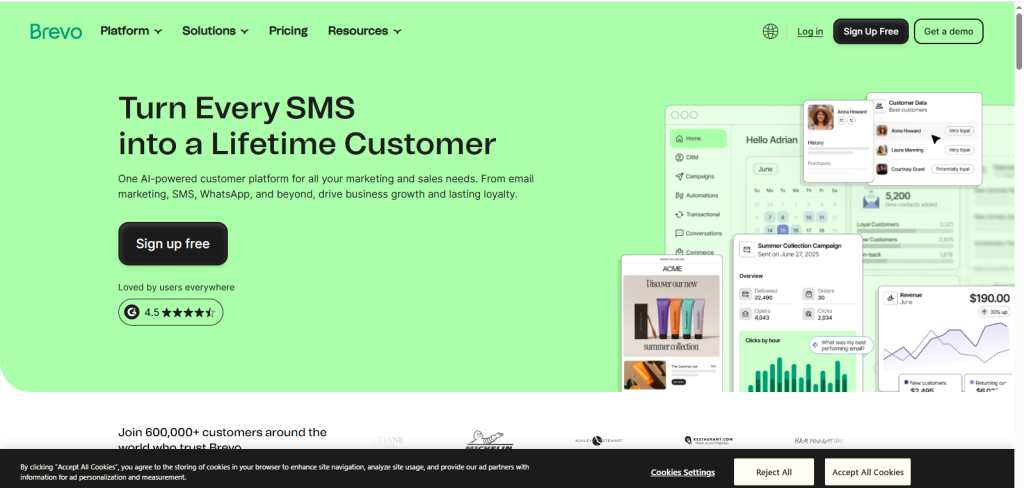
Brevo: Best for Transactional & Marketing Emails
Brevo is a versatile marketing automation platform that combines email marketing, transactional messaging, SMS campaigns, and even basic CRM functionality into a single, unified system.
What makes Brevo particularly attractive is its ability to handle both promotional campaigns and operational communications, such as order confirmations, shipping updates, password resets, and receipts, within the same dashboard.
The platform is designed with flexibility in mind, making it suitable for small and medium sized businesses that want scalable communication without enterprise-level complexity. Its clean interface and guided workflow builder allow users to create automated customer journeys based on behavior, engagement, and purchase activity.
Whether you’re nurturing leads, onboarding new subscribers, or sending real-time purchase confirmations, Brevo ensures that communication remains timely and relevant.
Key Automation Features:
- Drag and drop automation workflow builder with visual sequencing
- Transactional email triggers for order confirmations, receipts, and account notifications
- Behavioral, demographic, and engagement-based segmentation
- Multi channel automation combining email and SMS
Pros:
- Affordable pricing with one of the most generous free tiers in the market
- Ability to manage transactional and marketing emails from a single account
- User friendly automation interface suitable for beginners
- Strong deliverability infrastructure
Cons:
- Advanced analytics and reporting are less detailed than enterprise-level platforms
- Some automation features and SMS credits require higher-tier plans
- Fewer deep CRM features compared to specialized CRM tools
Pricing:
Paid plans unlock advanced automation workflows, remove sending limits, enable SMS campaigns, and provide deeper reporting capabilities starting at $8/mo.
Best For:
Small and medium sized businesses, ecommerce stores, and startups that need a cost effective platform capable of handling both marketing campaigns and transactional email automation within one streamlined system.
Kit (formerly ConvertKit): Best for Creators & Bloggers

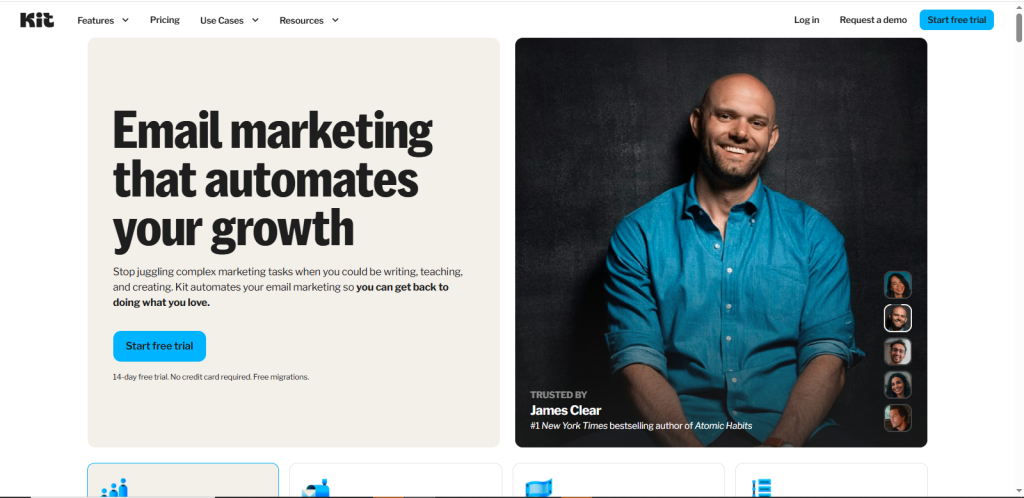
Kit is purpose built for creators, bloggers, authors, and solopreneurs who want to grow and monetize their audience without dealing with overly complex marketing systems. The platform emphasizes simplicity while still offering powerful behavior based automation tools such as visual email sequences, tagging, and subscriber segmentation.Creators can easily set up automated welcome series, lead magnet delivery, product launch funnels, and paid newsletter campaigns. Kit also integrates smoothly with content platforms and ecommerce tools, making it ideal for selling digital products, courses, or memberships. Its clean interface allows users to focus on building relationships and delivering value to their audience consistently.
Key Automation Features:
- Visual automation builder for sequences
- Subscriber tagging and segmentation
- Integration with Shopify, WordPress, and payment platforms
Pros:
- Easy to use with minimal setup
- Affordable pricing for creators
- Focused on audience engagement and growth
Cons:
- Less suited for large-scale enterprise automation
- Limited advanced reporting
Pricing:
Free plan available for up to 300 subscribers; paid plans scale with list size and add automation features starting at $33/mo
Best For:
Bloggers, content creators, and solopreneurs are seeking simple, effective email automation to grow and engage their audience.
Beehiiv: Best for Newsletter Monetization

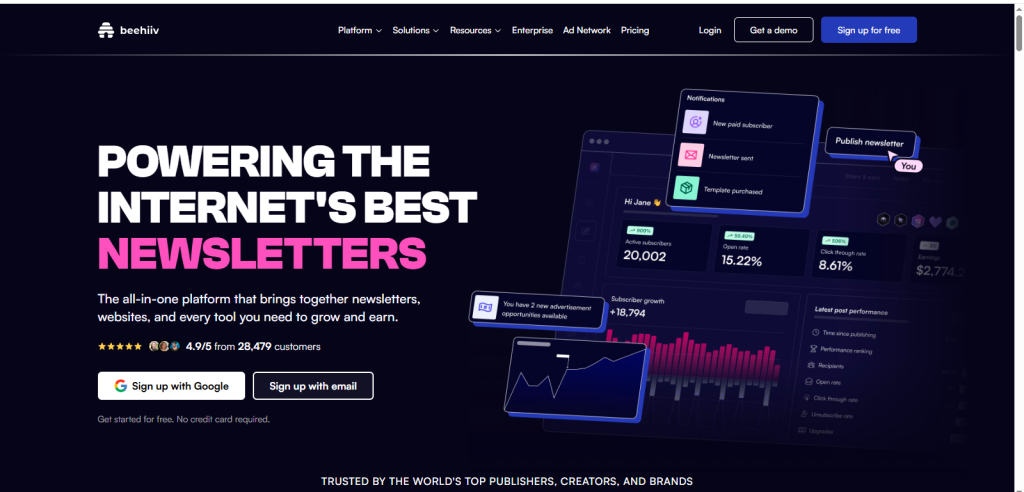
Beehiiv is a modern, creator-focused newsletter platform built specifically for writers, publishers, and content creators who want to grow and monetize their email audience. Unlike traditional email marketing tools that focus heavily on sales funnels, Beehiiv centers its features around audience growth, engagement, and subscription-based monetization.
It provides built in tools for creating onboarding sequences, welcome email series, and automated drip campaigns that help nurture new subscribers from day one. One of Beehiiv’s standout strengths is its monetization infrastructure. Creators can easily launch paid newsletters, manage premium subscribers, and track revenue directly within the platform.
It also includes referral programs and audience growth tools that encourage organic list expansion. With a clean, intuitive interface and analytics designed for content performance, Beehiiv allows creators to focus on delivering valuable content while automating engagement and subscription management in the background.
Key Automation Features:
- Welcome email sequences for new subscribers
- Automated drip campaigns and content scheduling
- Integration with payment processors for monetization
Pros:
- Excellent for growing newsletter audiences
- Built-in monetization features for subscriptions
- Intuitive interface for creators
Cons:
- Limited CRM and ecommerce integrations
- Advanced automation is still developing.
Pricing:
Free tier available with basic automation; paid plans unlock premium features and subscriber analytics, starting at $43/mo.
Best For:
Content creators, writers, and independent publishers aiming to grow and monetize their email newsletter.
Omnisend: Best for Ecommerce Automation

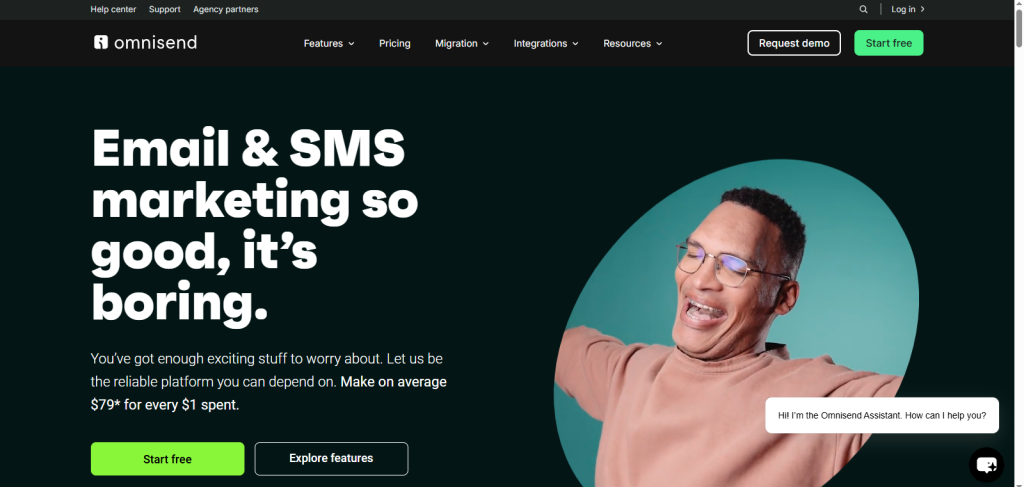
Omnisend is a robust email and SMS automation platform tailor made for ecommerce brands that want to drive revenue with behavior-based messaging. Unlike general email marketing tools, Omnisend is designed to integrate deeply with online storefronts such as Shopify, WooCommerce, and BigCommerce.It allows brands to build sophisticated automation sequences based on shopper behavior, including cart abandonment, product views, purchases, and more, turning browsers into buyers without manual intervention.
Key Automation Features:
- Pre-built automation workflows for welcome series, cart abandonment, and post-purchase follow-ups
- Multi channel messaging across email, SMS, and push notifications
- Dynamic product recommendations within emails
- Advanced segmentation based on behavior and purchase history
Pros:
- Excellent ecommerce centered automation
- Easy setup with visual workflow builder
- Powerful multi-channel automation increases conversions.
Cons:
- Advanced features require higher pricing tiers
- Not ideal for non-commerce businesses with limited ecommerce needs
Pricing:
Free plan available with basic automation; paid tiers unlock SMS, advanced automations, and deeper analytics, starting at $11.2/mo.
Best For:
Ecommerce businesses and online retailers that want to automate revenue-driving campaigns across email, SMS, and push notifications while leveraging customer behavior data to increase conversions and lifetime value.
MailerLite: Best Affordable Email Automation Tool
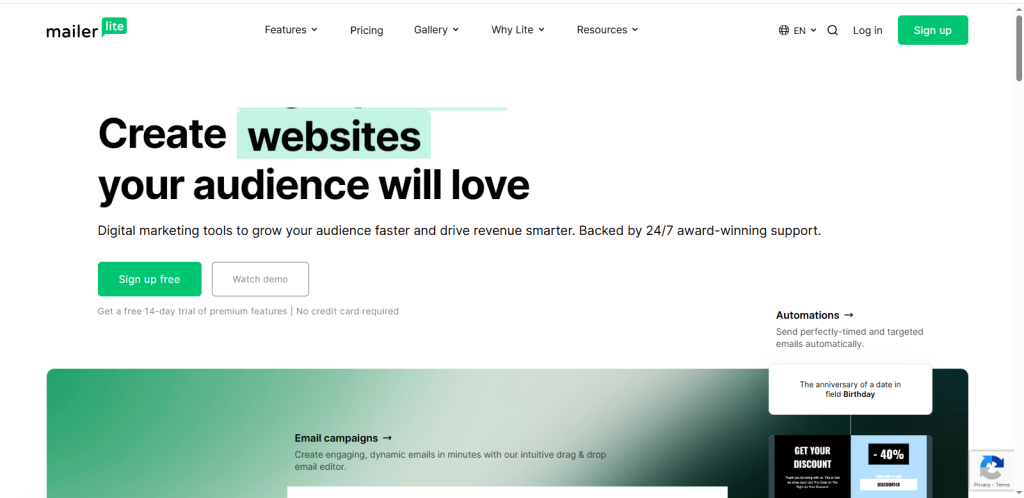
MailerLite offers budget friendly email automation without compromising core functionality. It is especially popular among startups, bloggers, educators, and small businesses that want professional marketing tools without enterprise level pricing. The platform combines a clean user interface with powerful automation workflows, making it approachable for beginners while still useful for scaling brands.Beyond automation, MailerLite includes built-in landing pages, pop up forms, and website builders, allowing businesses to manage both lead generation and nurturing from one place. Its automation builder supports conditional logic, enabling users to create segmented journeys based on subscriber behavior.
Whether you’re launching a course, promoting digital products, or nurturing email subscribers, MailerLite provides reliable automation without overwhelming users with unnecessary complexity. It strikes a strong balance between affordability, usability, and performance.
Key Automation Features:
- Visual automation builder with conditional logic
- Subscriber tagging and segmentation
- Event based triggers (e.g., sign ups, clicks, purchases)
- Landing page and form integrations for lead capture
Pros:
- Very easy to use for beginners
- Affordable pricing, even on paid plans
- All in one functionality with forms and landing pages
Cons:
- Less advanced analytics than enterprise tools
- Limited native CRM functions
Pricing:
Free plan for small lists; paid plans scale by contact count while unlocking deeper automation and landing page features, starting at $9/mo.
Best For:
Small businesses and early stage startups that want a simple but effective automation solution without a big budget.
Zoho Campaigns: Best for Zoho Ecosystem Users

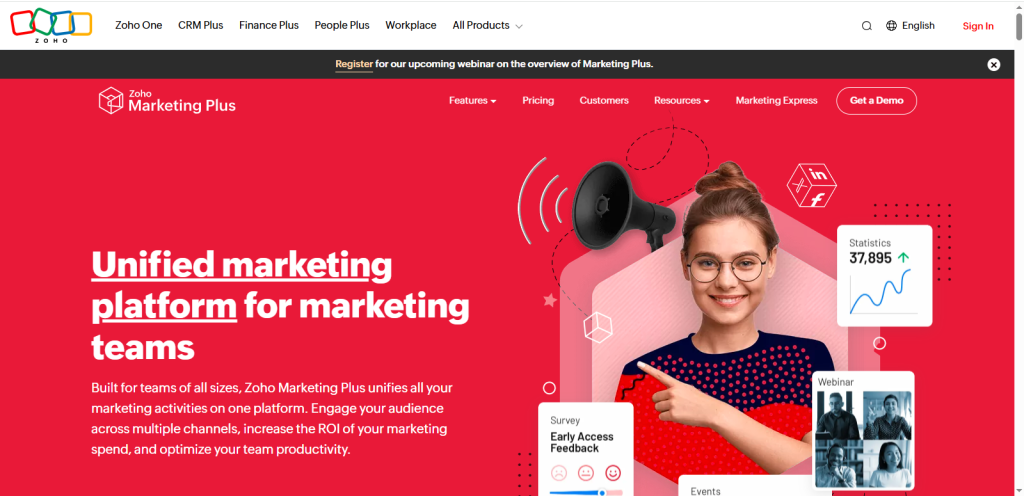
Zoho Campaigns is part of the broader Zoho software ecosystem, making it an excellent choice for businesses already using Zoho CRM, Zoho Desk, or other Zoho applications. The platform allows seamless syncing between CRM data and email automation workflows, enabling highly targeted campaigns based on customer lifecycle stages and sales activity.One of its biggest advantages is centralized business data. Because it connects directly to Zoho CRM, marketers can trigger automated emails based on deal stages, contact updates, or lead scores. This tight integration helps bridge the gap between marketing and sales teams.
Zoho Campaigns also offers audience segmentation, autoresponders, and basic workflow automation that support consistent communication. For businesses committed to the Zoho ecosystem, it creates a streamlined, unified marketing environment without the need for third-party integrations.
Key Automation Features:
- Automated drip campaigns
- CRM linked triggers based on contact behavior
- Workflow builder with segmentation
- Integration with other Zoho apps (CRM, Desk, Commerce)
Pros:
- Excellent integration with Zoho’s ecosystem
- Affordable pricing
- Good email deliverability
Cons:
- Interface can feel outdated
- Not as feature rich as specialist automation tools
Pricing:
Flexible plans based on email volume; includes automation and CRM data syncing.
Best For:
Businesses already invested in Zoho products want unified automation across marketing and sales.
Lemlist: Best for Cold Outreach Automation

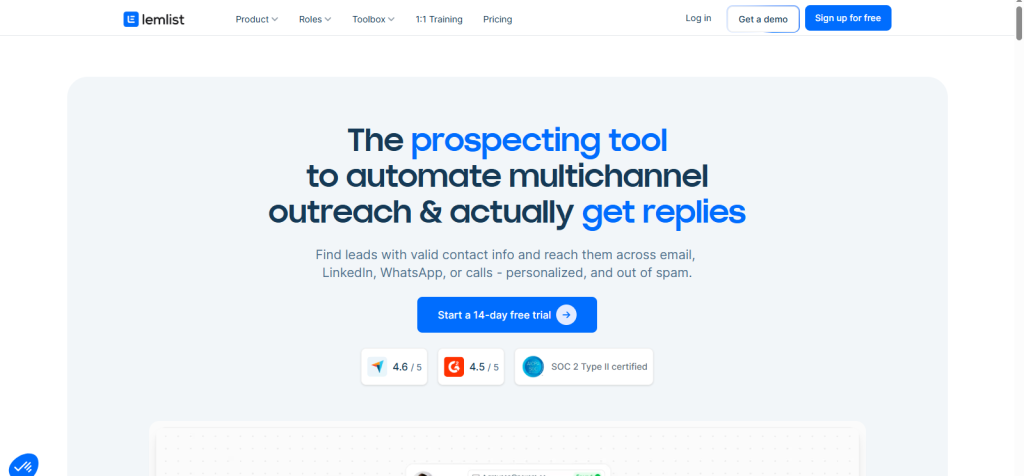
Lemlist is built primarily for sales teams and agencies focused on cold email outreach and lead generation. Unlike traditional newsletter platforms, Lemlist specializes in highly personalized, multi step outreach campaigns that replicate one on one communication at scale. Its automation sequences are designed to increase reply rates rather than broadcast promotional messages.The platform includes advanced personalization options such as custom images, dynamic text variables, and AI assisted copy suggestions. It also offers built in email warm up tools to improve deliverability, a crucial factor in cold outreach campaigns.
With automated follow ups triggered by recipient behavior, sales teams can nurture prospects without manual tracking. Lemlist is especially useful for B2B companies that rely on outbound lead acquisition and need automation that feels authentic rather than mass-produced.
Key Automation Features:
- Multi step cold email sequences
- Personalization tags and dynamic fields
- AI generated subject lines and content suggestions.
- Automatic follow up scheduling
Pros:
- Powerful cold outreach automation
- Personalization that mimics manual emails
- Built in deliverability tools
Cons:
- Not a full featured newsletter or ecommerce tool
- Pricing rises with advanced features.
Pricing:
Subscription tiers with outreach automation, advanced personalization, and team features. Starting at $63/mo.
Best For:
Sales teams, B2B outreach, and agencies focusing on lead acquisition through cold email sequences.
Moosend: Best Budget-Friendly Automation Tool

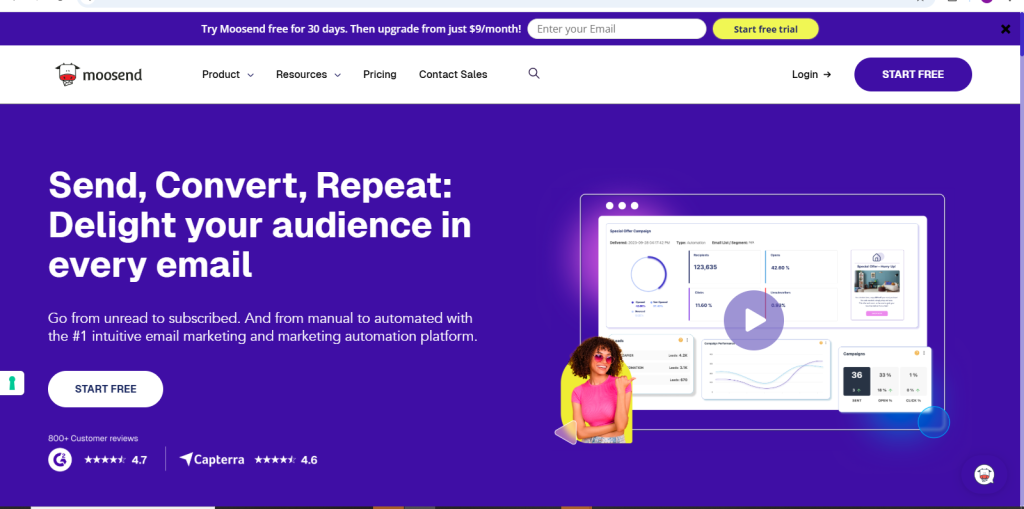
Moosend provides strong email automation features at a competitive price point, making it appealing to startups and small businesses operating on tight budgets. Despite its affordability, it includes many advanced capabilities such as conditional automation flows, segmentation tools, and real time reporting dashboards.The platform’s visual automation builder allows users to create subscriber journeys triggered by actions like opens, clicks, purchases, and website visits. Moosend also includes personalization features that dynamically adjust email content based on user data.
Its interface is simple and efficient, helping teams launch campaigns quickly. While it may not have the brand recognition of larger platforms, it offers solid performance and dependable deliverability. For businesses seeking cost effective automation with professional functionality, Moosend provides impressive value.
Key Automation Features:
- Automation workflows with conditional splits
- Behavioral and engagement-based segmentation
- Real time analytics and reporting
- Pre built automation templates
Pros:
- Highly affordable for growing businesses
- Easy to learn and implement
- Solid reporting
Cons:
- Smaller integration ecosystem
- Less brand visibility in larger markets
Pricing:
Free trial available; paid plans scale with contact count and unlock advanced automation, starting at $7/mo.
Best For:
Startups and small to mid sized businesses that want automation features without high monthly fees.
EmailOctopus: Best Low Cost Email Automation Tool

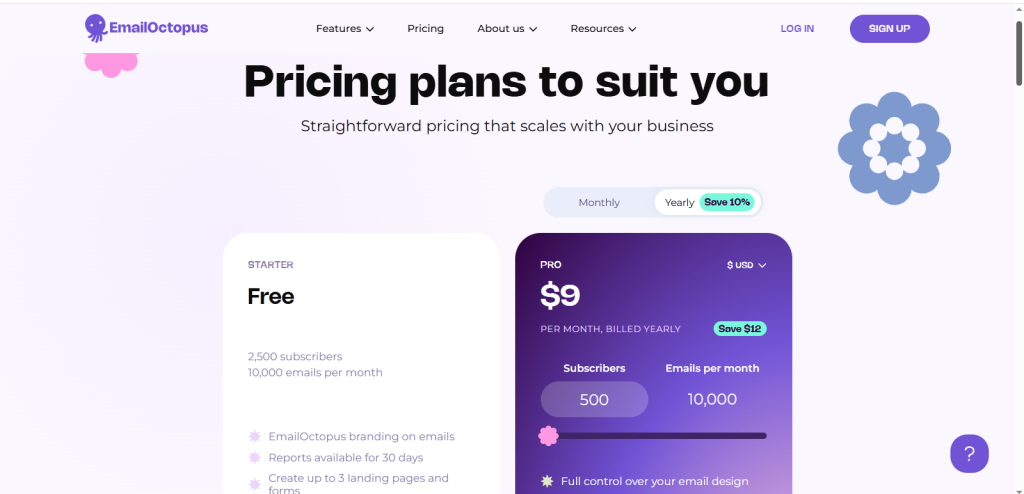
EmailOctopus is a streamlined email automation platform designed for simplicity and affordability. It is particularly attractive to startups, nonprofits, bloggers, and small newsletters that want reliable email marketing without paying premium prices. Built on Amazon SES infrastructure, it offers strong deliverability at a lower cost compared to many competitors.The platform focuses on straightforward automation such as drip campaigns, welcome sequences, and subscriber segmentation. While it does not offer highly advanced branching workflows, it provides all the essential automation tools needed for nurturing subscribers consistently.
EmailOctopus also supports integrations with common tools and website platforms, making setup relatively simple. For businesses that prioritize cost efficiency and dependable email performance over complex enterprise automation, EmailOctopus offers a practical and budget-friendly solution.
Key Automation Features:
- Automated drip campaigns
- Event based triggers
- Basic segmentation
- Easy list management
Pros:
- Extremely affordable pricing
- High deliverability via Amazon SES
- Simple and fast setup
Cons:
- Limited advanced automation features
- Fewer templates and integrations
Pricing:
Very competitive pricing based on email usage rather than contact size, making it ideal for small lists. It starts at $9/mo.
Best For:
Budget focused businesses, newsletters, and teams who want reliable automation without the feature overload.
Benefits of Using Email Automation Tools
In 2026, the inbox has become a battlefield, subscribers are overwhelmed with messages, and generic email blasts just don’t cut it anymore. The brands winning attention are those using smart, automated email workflows that deliver the right message at the right time. Here’s what you gain by adopting the best email automation tools:
✅ Time Saved with Automated Workflows
No more manually drafting and sending every email. Automation takes over repetitive tasks, freeing your team to focus on strategy, content, and creative growth initiatives. Campaigns like welcome emails, cart recovery sequences, and follow-ups can run continuously without manual intervention.
✅ Personalization at Scale
Segmenting and targeting based on subscriber behavior, demographics, and engagement allows you to deliver personalized messages to thousands of contacts effortlessly. This increases relevance, improves engagement, and encourages more conversions.
✅ Higher Open & Conversion Rates
Automated messages consistently outperform traditional campaigns. Some benchmarks show up to 2,361% higher performance, thanks to timely, behavior based triggers that reach subscribers when they are most likely to act.
✅ Better Lead Nurturing
Automation builds relationships over time. Prospects receive targeted information and offers as they move through your sales funnel, turning potential leads into paying customers.
✅ Lifecycle Management
From onboarding new subscribers to re-engaging inactive customers and delivering post-purchase follow-ups, automation ensures every touchpoint is meaningful and timely.
✅ Revenue Growth
Businesses leveraging automation consistently earn more from email marketing. Certain workflows have been shown to generate $16.96 per recipient, demonstrating that strategic automation directly impacts.
How We Evaluated the Best Email Automation Tools
To make this comparison truly useful, we applied a rigorous evaluation framework to ensure that each email automation tool was assessed based on practical features, usability, and value.
Evaluation Criteria
Automation Workflows & Triggers
We looked at the ability to build behavior driven sequences that respond to specific subscriber actions, such as signing up, clicking a link, or abandoning a cart. Tools with conditional logic, branching, and advanced triggers were rated higher because they allow more sophisticated, personalized campaigns.
Segmentation & Personalization
Effective automation depends on targeting the right audience. We evaluated each platform’s ability to deliver dynamic content based on behavioral, demographic, or transactional data, ensuring that messages are relevant and timely for every subscriber.
Email Editor & Templates
Ease of use is critical. We prioritized platforms with drag and drop editors, pre built automation templates, and customization flexibility, enabling users to quickly create professional campaigns without technical expertise.
CRM & Ecommerce Integrations
Seamless integration with Shopify, WooCommerce, Salesforce, Zapier, and other platforms allows marketers to sync customer data, track conversions, and automate workflows across systems.
Deliverability & Analytics
We examined deliverability rates and reporting tools, including opens, clicks, and conversion metrics, to ensure campaigns reach the inbox and generate measurable results.
Free Plan vs Paid Value
Tools were compared based on features included in free tiers, limitations, and the value of paid upgrades.
Pricing Transparency
Clear, scalable pricing with no hidden fees was essential to help businesses of all sizes plan budgets effectively.
Conclusion
Email automation has now become more than an assistant marketing tool as a primary source of revenue, customer interaction, and retention. Some businesses that use automated workflows are finding up to 30 times more revenue per recipient than with manual campaigns by 2026.
The proportion of automated emails in total email sales is also disproportionately high, which confirms that intelligent automation can be used to deliver a significant improvement to business efficiency. In addition to revenue, automation enables the brands to provide personalized messages at scale, where every customer gets content that is relevant to his or her interests, behavior, and customer stage.
Regardless of whether you are operating a small online shop, a fast growing start up, or are a part of an enterprise marketing team, the platforms mentioned in this guide have solutions that suit your objectives.
Free and beginner-friendly plans are available to people who are just starting, and advanced engines can be used by the companies that require complicated workflows, multi channel messages, and in depth analytics. The trick is to determine the main use cases, which include welcome email series, cart abandonment recovery, customer onboarding, or lifecycle nurturing, and select a tool that fits your workflow, budget, and expansion goals.
Email automation can revolutionize your marketing when you have all the relevant strategy and platform. The result will be more engagement, increased click through rates, loyal customers, and a steady increase in revenue. Email automation is not a luxury in the current competitive world. It is an underlying component that assists companies to work smarter, save time, and ensure that they can get maximum results out of any message they send.
Email Automation Tools FAQs
These concise answers help clarify common questions and support SEO snippet visibility.